
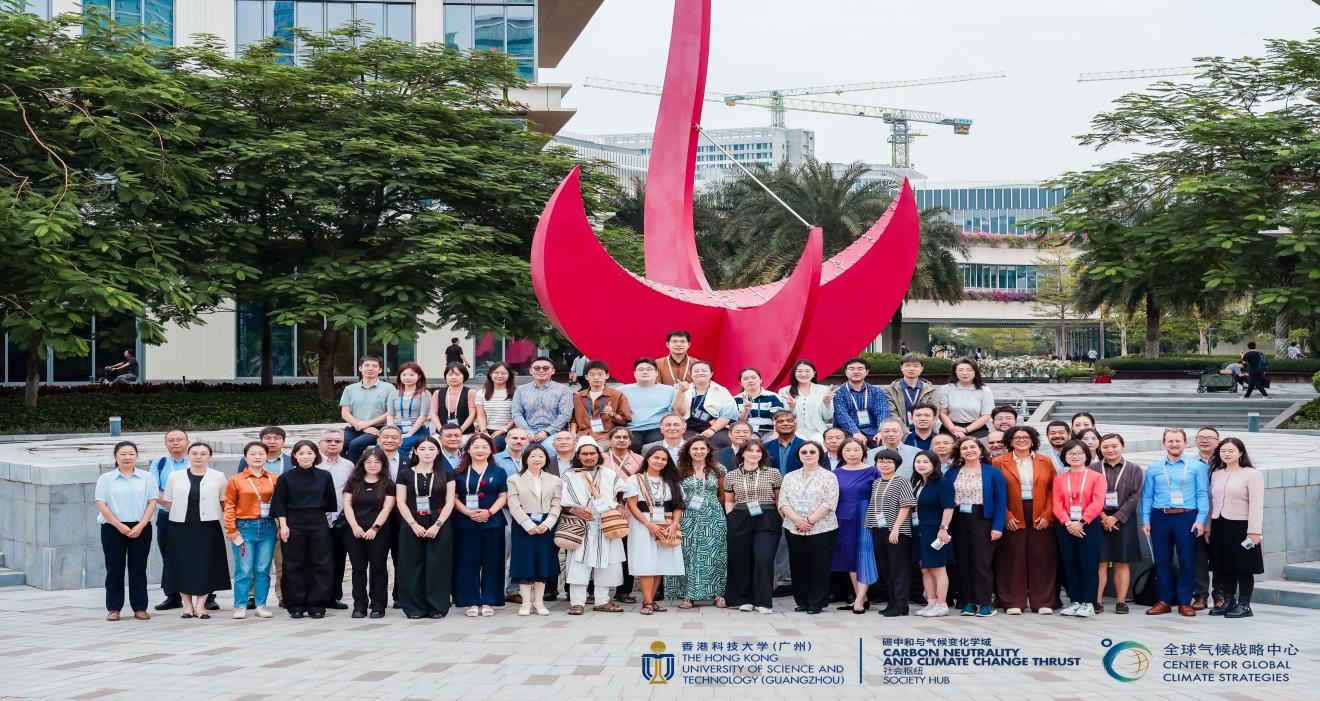
The international conference ‘Defining the Road to Zero Carbon Prosperity’ was held at The Hong Kong University of Science and Technology (Guangzhou) from 26 to 28 October
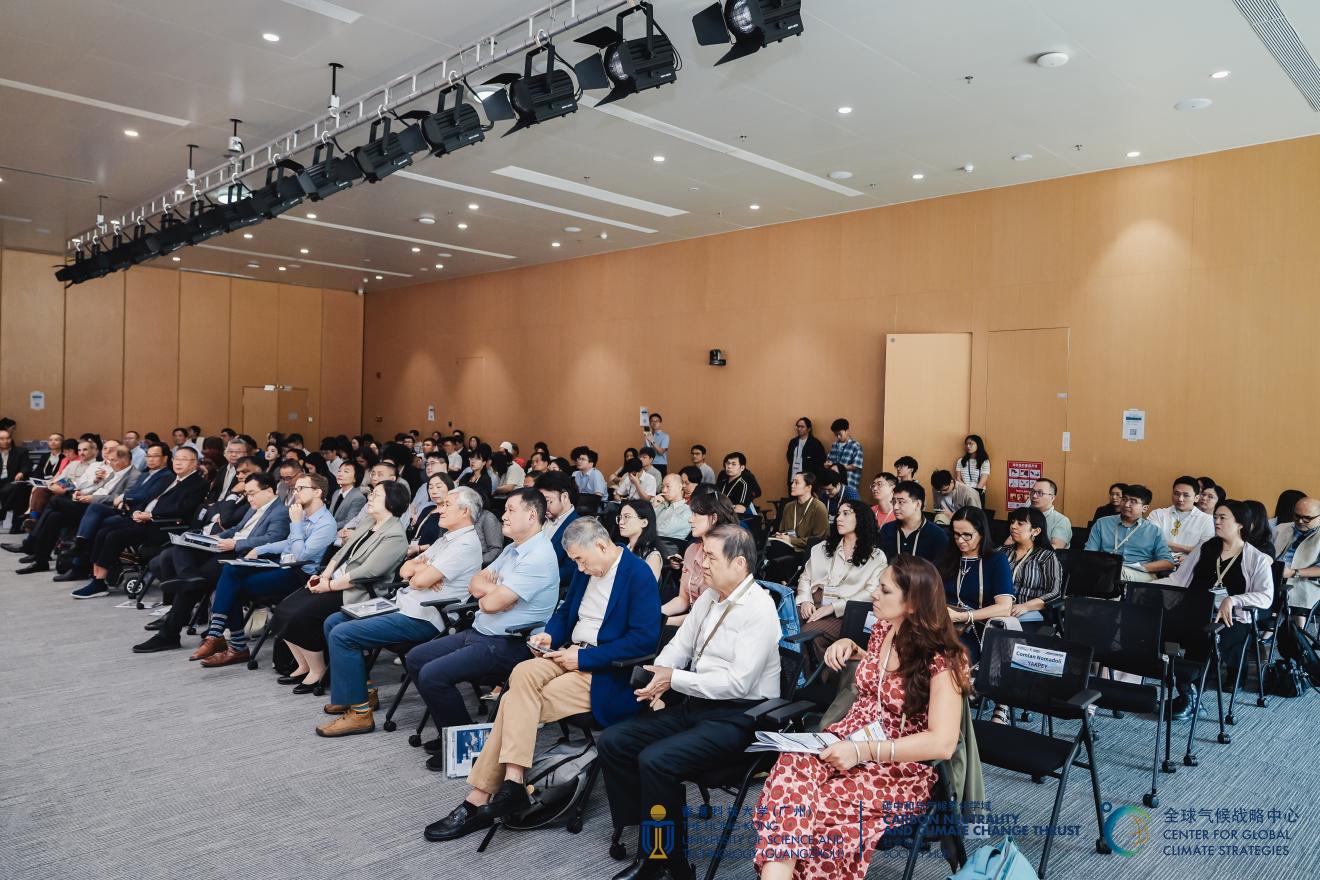
The international conference ‘Defining the Road to Zero Carbon Prosperity’ opened at The Hong Kong University of Science and Technology (Guangzhou) [HKUST(GZ)] on the afternoon of 26 October 2026. Bringing together over 220 scholars, policymakers, and representatives of international organisations and industry from around the world, the conference explored how zero-carbon energy can drive economic growth, industrial innovation, social well-being and international cooperation, and how new energy technologies can open up pathways to global economic prosperity and sustainable development. The conference ran from 26 to 28 October and was hosted by HKUST(GZ), with the Center for Global Climate Strategies (CGCS) serving as its secretariat and academic coordinator.
In April 2026, at the first International Conference on the Transition Away from Fossil Fuels (TAFF) in Santa Marta, Colombia, the HKUST(GZ) team introduced the concept of Zero Carbon Prosperity. The concept received a positive international response and was subsequently reflected in several conference outcome documents. The Guangzhou conference further developed its theoretical framework, development pathways and policy applications, advancing the concept from academic discussion towards international cooperation and practical implementation.
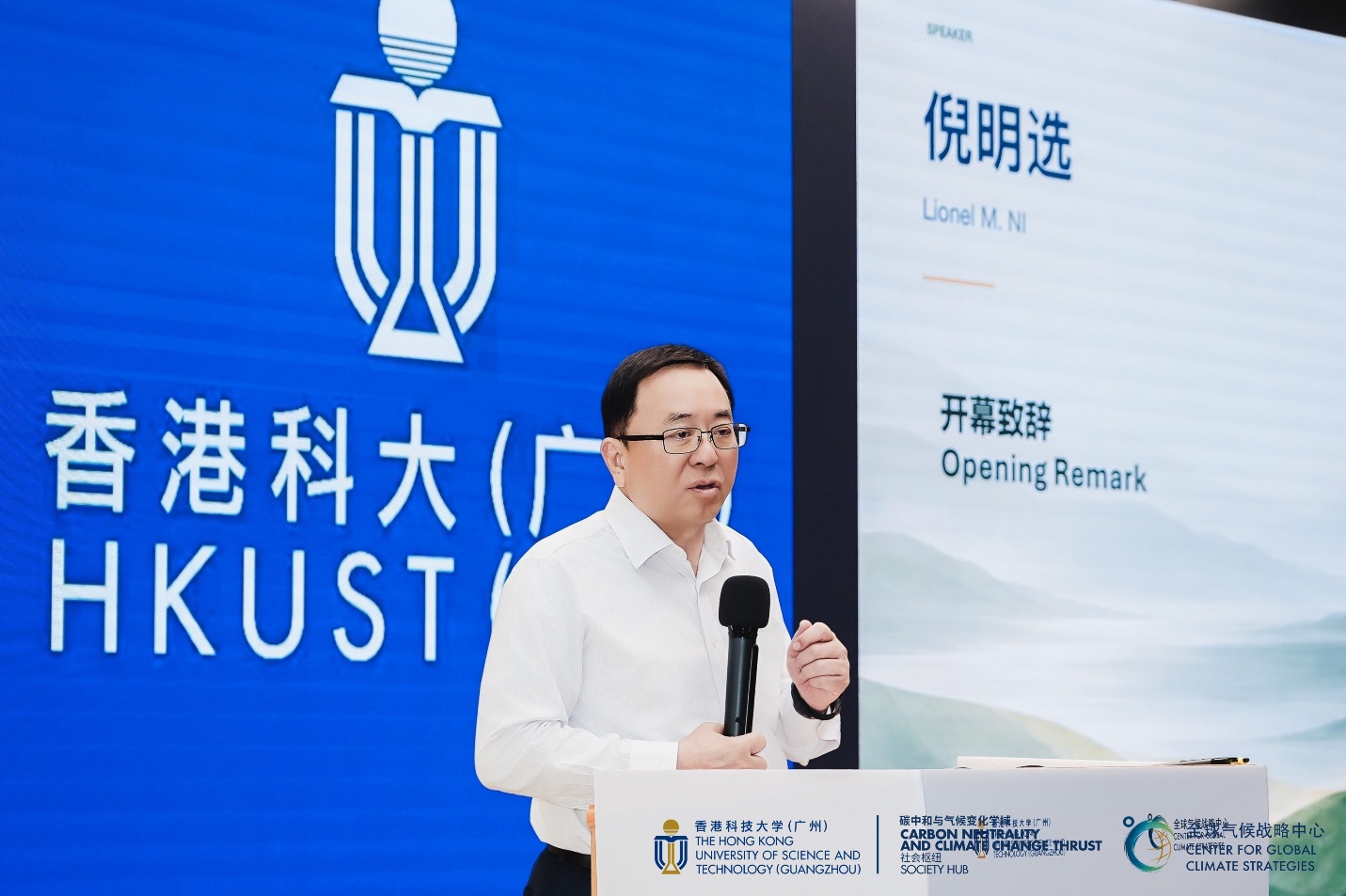
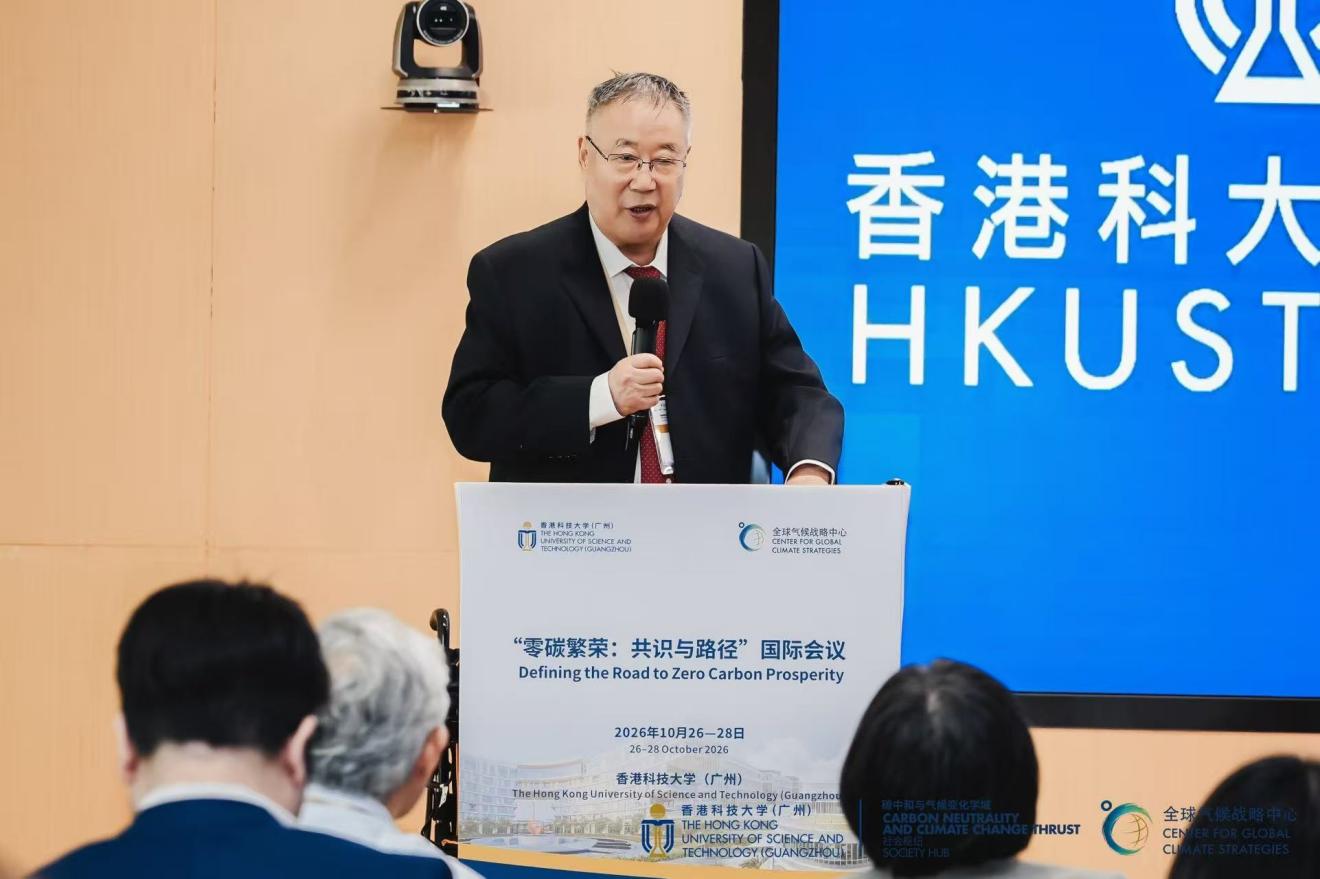
On the afternoon of 26 October, Lionel M. Ni, President of HKUST(GZ), and Dahe Qin, an academician of the Chinese Academy of Sciences, attended the opening ceremony and delivered opening remarks. Ye Qi chaired the session.
Ni said that, as an innovative research university based in the Guangdong–Hong Kong–Macao Greater Bay Area and engaged with the world, HKUST(GZ) draws on its strengths in interdisciplinary research, technological innovation and international cooperation to integrate zero-carbon energy technologies with economic and social development. The conference provided an important international platform for exchanging ideas on Zero Carbon Prosperity and demonstrated the university’s efforts to address global challenges through technological innovation and participate in international climate governance. HKUST(GZ) sees its campus as a pioneer in putting Zero Carbon Prosperity into practice. The university is investing in the development of a zero-carbon campus, providing a real-world setting for the construction and operation of zero-carbon energy systems and the validation of related technologies.
In his opening remarks, Qin noted that glacier retreat, permafrost thaw, sea-level rise and extreme weather and climate events are affecting water resources, food security and human health. At the same time, countries face development priorities such as energy security, employment and poverty reduction. How to bring climate action and development together is therefore a question the international community must address. Qin expressed the hope that the conference would formulate a clear, open and widely applicable concept, refine a testable and measurable framework linking energy, economic, social and ecological objectives, and propose practical technological pathways, institutional arrangements and collaborative projects to support future international climate cooperation.
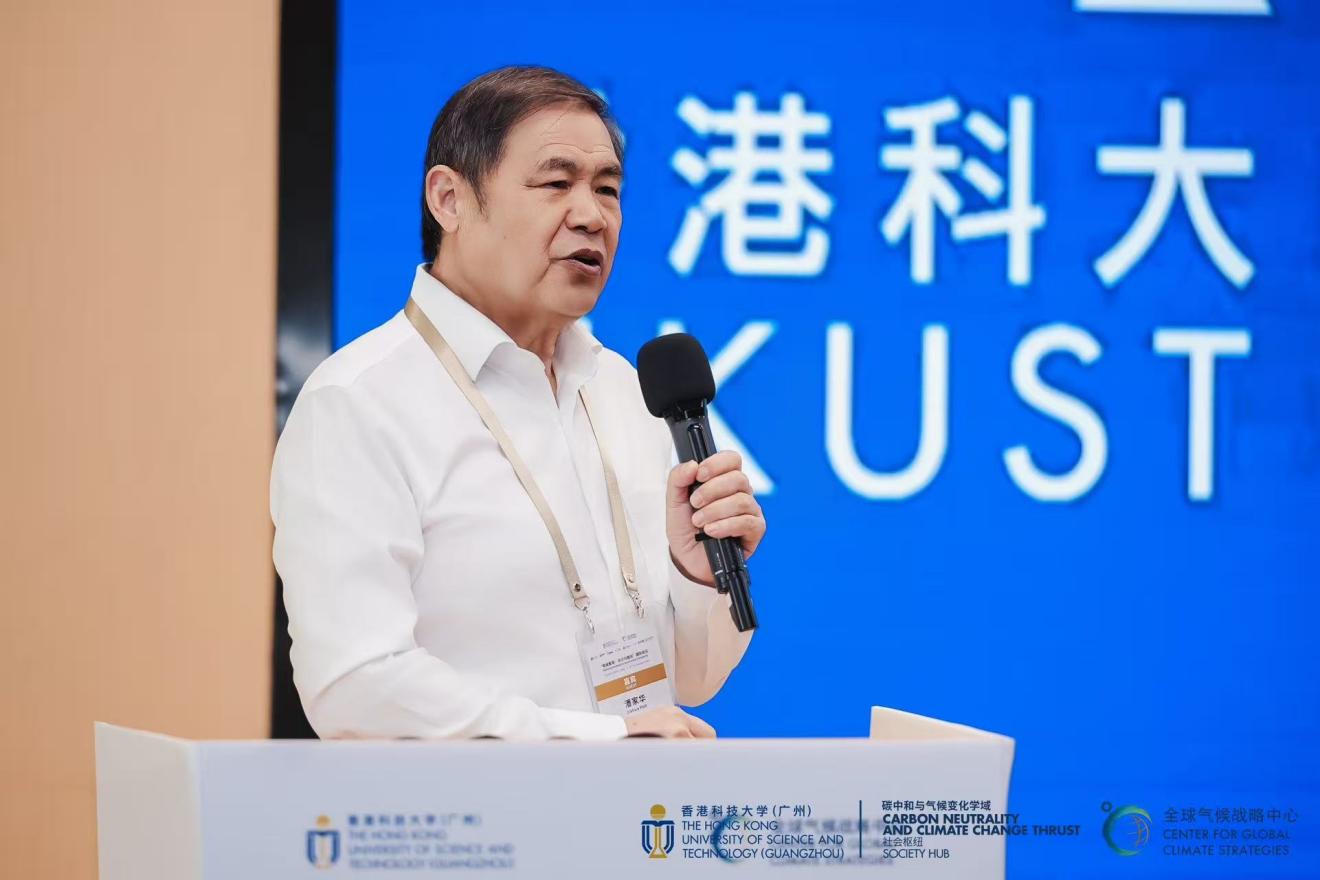
Dividing the Pie or Growing It? From Carbon Constraints to a New Development Paradigm of Zero Carbon Prosperity
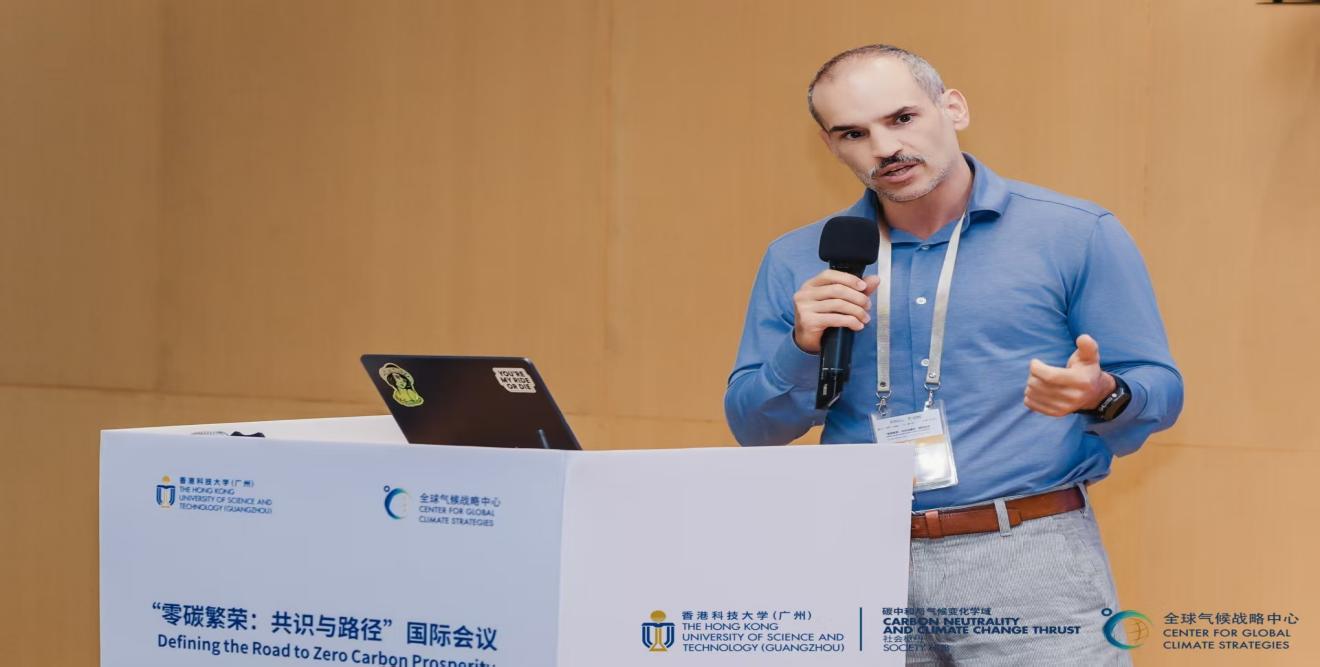
In his keynote address, Jiahua Pan, Acting Director of CGCS at HKUST(GZ), argued that the carbon budget available for limiting global warming to 1.5°C is extremely limited. Countries therefore strive to safeguard their rights to emit, creating a classic zero-sum contest over how to ‘divide the pie’. As a result, UN climate negotiations have become deadlocked and progress has been difficult. Breaking this impasse requires moving beyond the zero-sum mindset of dividing a fixed pie. Analysis by CGCS at HKUST(GZ) shows that economic development and well-being require energy services, rather than carbon. In China, photovoltaic modules that generate zero-carbon electricity, traction batteries that store energy, and end uses such as electric vehicles are forming an industrial chain capable of displacing oil consumption. This provides an industrial foundation for a chain of zero-carbon electricity, storage and electric end uses to partially replace the fossil-fuel chain that powers internal combustion engine vehicles. With rapid advances in solar and wind power, energy storage and electrification, the global energy system is undergoing a profound transformation. Zero-carbon development is not only an important means of addressing climate change, but also a new driver of energy security, economic growth, industrial upgrading and improved livelihoods.
Pan noted that Zero Carbon Prosperity is emerging as a new development paradigm. China’s zero-carbon production and consumption systems, exemplified by the ‘new trio’ of electric vehicles, lithium-ion batteries and photovoltaic products, can be entirely decoupled from carbon dioxide emissions from fossil-fuel combustion. This offers a solution based on cooperation and mutual benefit that can help the international community move beyond a climate governance model defined by zero-sum competition under carbon constraints. Renewable energy combined with storage technologies can provide reliable, flexible zero-carbon electricity while creating economic growth, employment opportunities and better lives. Zero Carbon Prosperity focuses on the opportunities arising from the energy transition. It emphasises developing zero-carbon energy to reduce energy costs, strengthen energy security and cultivate emerging industries, enabling more countries, businesses and ordinary households to share in the benefits of new energy development. Renewable resources such as solar and wind are widely distributed, and electricity generation from them requires no ongoing fuel purchases. Combined with energy storage, smart grids and electrification, they can give fresh impetus to manufacturing, transport, agricultural production and the digital economy, driving profound changes in models of economic development.
Pushpam Kumar, Professor at the University of Sussex, UK, and former Chief Environmental Economist at the United Nations Environment Programme, noted that the zero-carbon transition offers not only environmental value but also long-term economic and social benefits. When climate-related disaster losses, public health, natural capital and industrial innovation are taken into account, the overall benefits of climate action may exceed the costs of transition. However, these benefits will not materialise automatically. Countries in the Global South still face challenges including high financing costs, inadequate infrastructure and an uneven distribution of transition benefits. Kumar stressed that these countries should move beyond the conventional practice of measuring development solely through GDP and incorporate natural capital, social well-being and economic resilience into their assessment frameworks. By pricing climate risks, developing innovative financing mechanisms and providing differentiated policy support, they can direct capital towards sustainable development and make the zero-carbon transition an economic opportunity for lasting prosperity in the Global South.
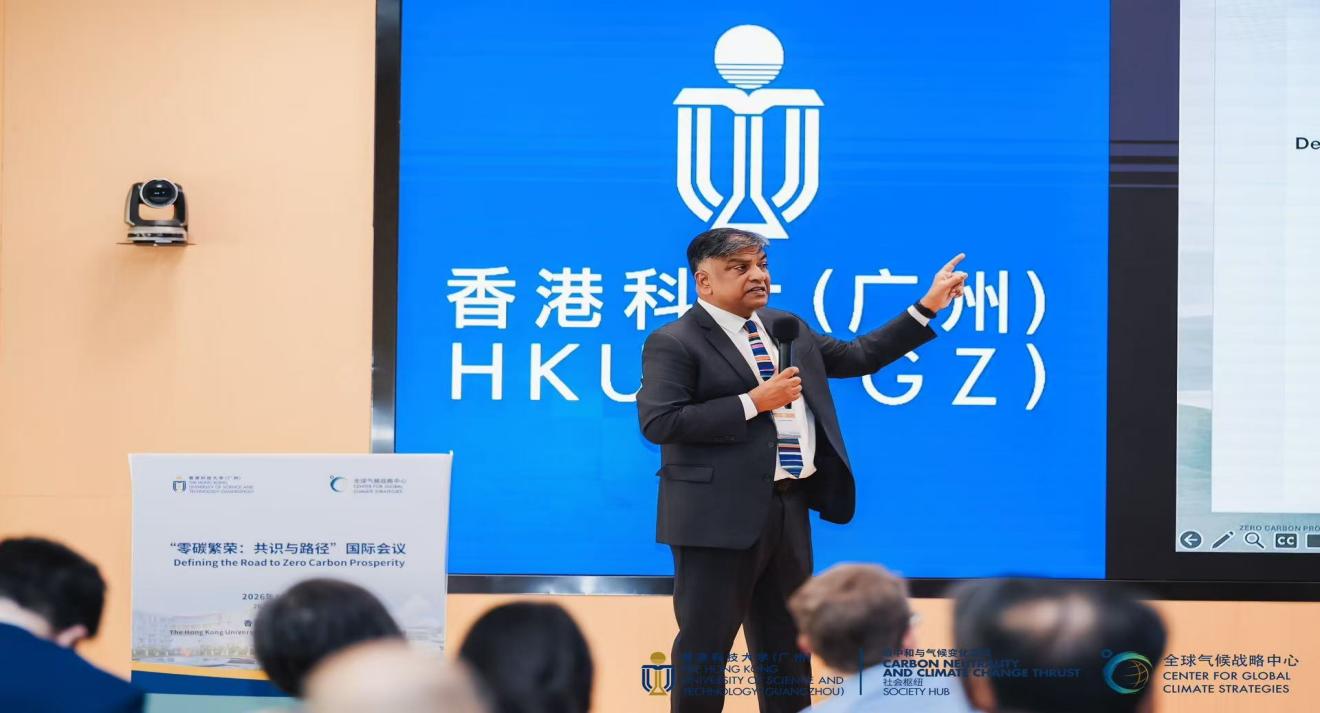
In his address, Changwen Zhao, Chair Professor at Sun Yat-sen University and former Director of the Center for International Knowledge on Development, emphasised that countries in the Global South do not have to choose between industrialisation and a zero-carbon transition: the two can reinforce each other and advance together. He proposed a ‘dual-track transition towards industrialisation and Zero Carbon Prosperity’. One track involves reducing the systemic costs of industrialisation through infrastructure development, industrial parks, technology transfer and local capacity building. The other involves developing new sources of industrial competitiveness through new energy technologies, green electricity and zero-carbon industries, turning carbon constraints into opportunities for economic growth. He stressed that the value of China’s experience lies not only in providing infrastructure and technology, but also in helping developing countries build industrial systems capable of self-sustaining development through practices such as zero-carbon industrial parks, direct green electricity supply and distributed energy. These efforts can advance industrialisation, economic growth and Zero Carbon Prosperity together.
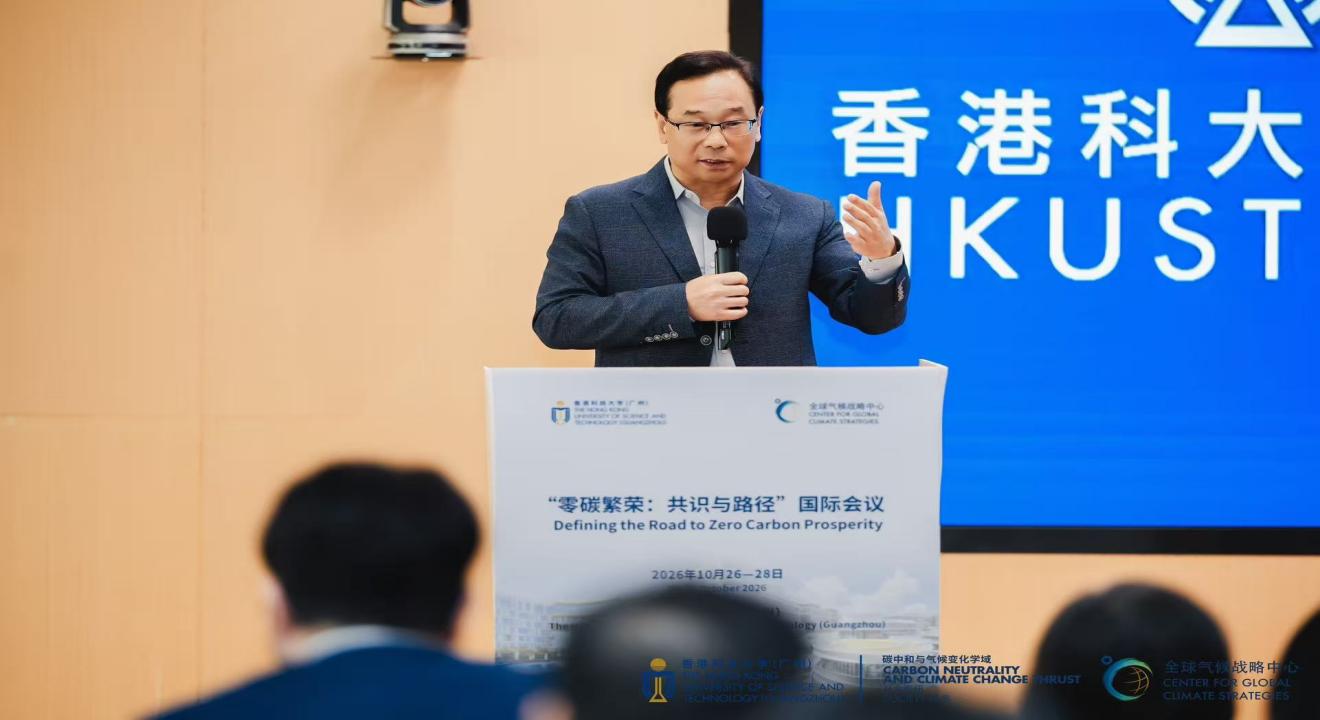
Sharing Opportunities for Zero-Carbon Development and Advancing Shared Prosperity in the Global South
The ‘South–North–South’ roundtable dialogue held that afternoon brought together policymakers and scholars from China, Africa, Asia and international research institutions for in-depth discussions on pathways to Zero Carbon Prosperity and a just transition. Participants explored how the technological advantages of zero-carbon energy can be translated into drivers of economic growth, enabling more countries and communities to share in opportunities for green development.
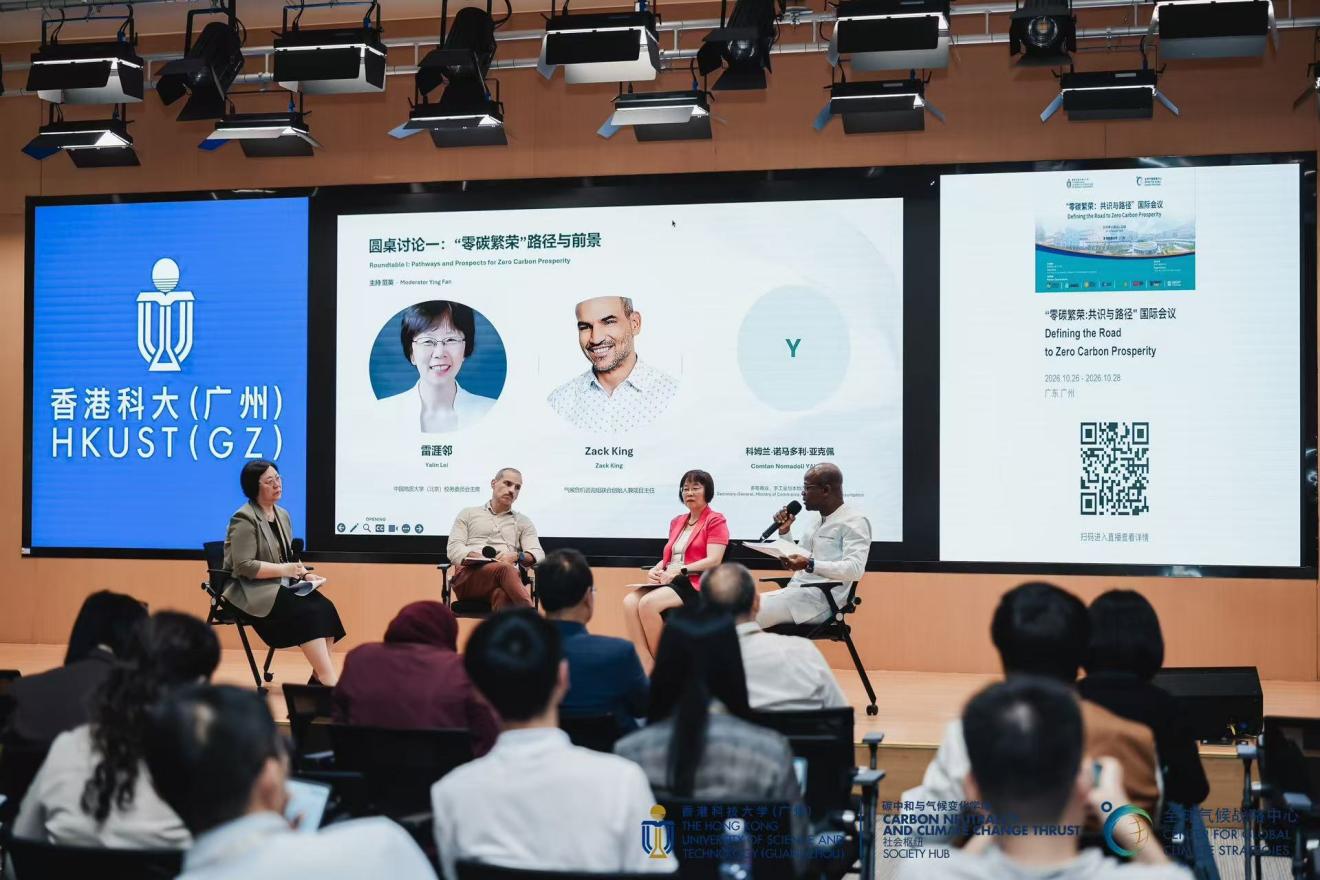
The first roundtable, ‘Zero Carbon Prosperity: Path and Future’, was chaired by Ying Fan, Director of the Ministry of Education (MOE) Laboratory of Low Carbon Intelligent Governance at Beihang University. Panellists included Yalin Lei, Chair of the University Council at China University of Geosciences, Beijing; Zack King, Co-Founder and Programme Director of the Climate Crisis Advisory Group; and Comlan Nomadoli Yakpey. They discussed how zero-carbon energy can move beyond its traditional framing as a cost of emissions reduction to become a new driver of economic growth, job creation and social well-being, focusing on declining costs and market competitiveness across new energy industrial chains. The discussion also addressed security and equity in critical mineral supply chains, technology transfer and the sharing of industrial benefits, as well as how energy storage, smart grids and electrification can support a new power system based primarily on wind and solar energy. By exchanging development experience from different countries, participants explored pathways to Zero Carbon Prosperity that balance market efficiency, energy security, equity and inclusion, helping new energy industries shift from reliance on policy support towards market-driven development and become a sustained source of economic and social progress.
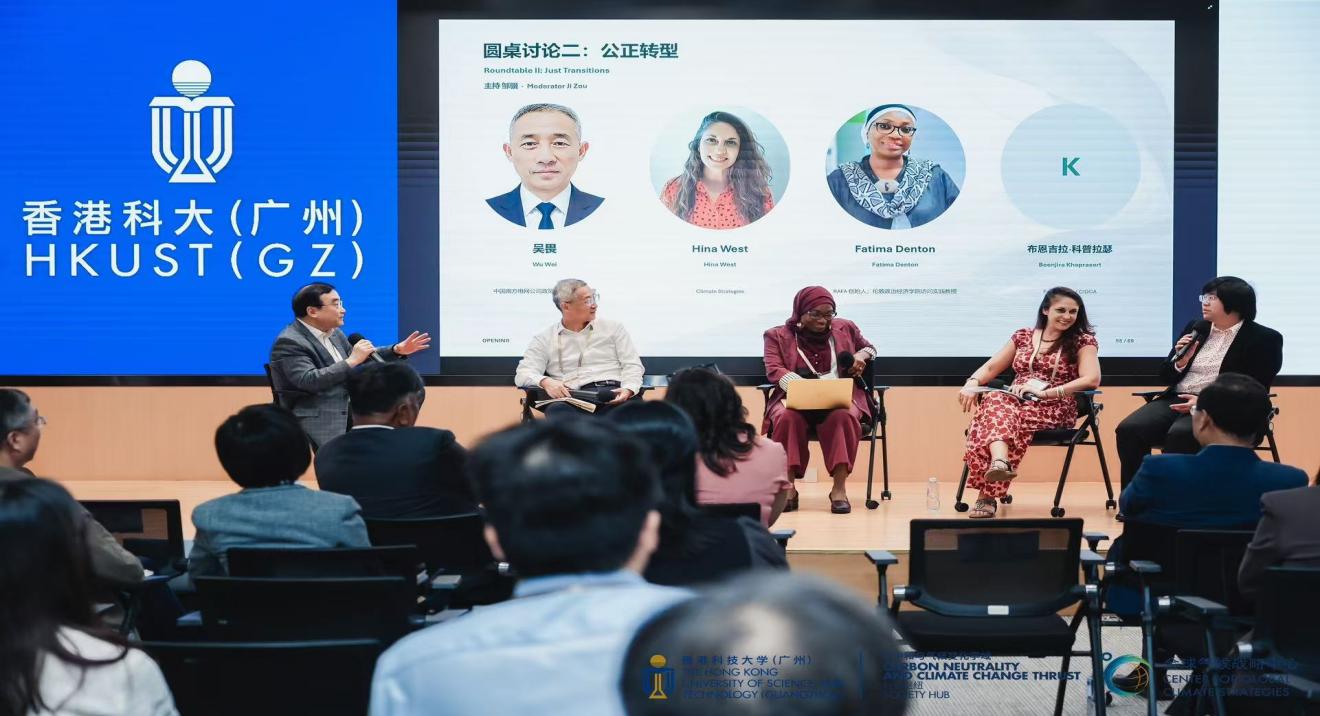
The second roundtable, ‘Just Transitions’, was chaired by Ji Zou, CEO and President of Energy Foundation China. Panellists included Wei Wu, Deputy General Manager of the Policy Research Department at China Southern Power Grid; Hina West of Climate Strategies; Fatima Denton, Founder of Resource Analytics for Future Africa (RAFA) and Visiting Professor in Practice at the London School of Economics and Political Science; and Boonjira Khoprasert. They discussed equity in development, social inclusion and the sharing of benefits during the energy transition. The discussion focused on how to accommodate the development needs of different countries and groups, and how green finance, employment transitions, capacity building and international cooperation can help Africa, Southeast Asia and developing countries more broadly overcome financial, technological and institutional barriers. These efforts can prevent the energy transition from exacerbating existing development inequalities and ensure that the economic and social benefits of clean energy reach a wider population.
The two dialogues addressed two central questions of Zero Carbon Prosperity: how zero-carbon energy can create new development opportunities, and how those opportunities can translate into more equitable, inclusive and shared prosperity. By connecting development experience and policy practice across regions, the conference aimed to advance new approaches to international cooperation that bring together economic growth, climate action and social equity.
Zero Carbon Prosperity involves more than a transformation in energy technologies; it also concerns equity and inclusion in global development. For developing countries that continue to face inadequate energy supplies, weak infrastructure and a shortage of development finance, new energy technologies offer opportunities to improve energy access, develop local industries and create jobs.
For example, distributed photovoltaic and energy storage systems can supply electricity to remote areas, supporting agricultural irrigation, food refrigeration and small-scale processing. Combining clean electricity with electrification technologies can also help advance industrial development, improve public services and strengthen economic resilience.
Through the ‘South–North–South’ dialogue, the conference encouraged countries to share their experience in new energy development and strengthen technological cooperation, green finance and industrial collaboration, so that the development benefits of zero-carbon energy can reach more countries and communities.
Ten Workstreams Deepen Discussions to Develop Actionable Policy Recommendations
In line with the programme, parallel workstream meetings and cross-cutting exchanges addressed ten topics: public health; methane mitigation; central banking; maritime and aviation decarbonisation; the theory and practice of Zero Carbon Prosperity; bringing Zero Carbon Prosperity to life; food security and rural development; just transition and economic diversification; Earth resilience; and cooperation along critical mineral value chains. Through interdisciplinary dialogue, these discussions advanced the development of a theoretical framework, assessment criteria and policy recommendations for Zero Carbon Prosperity, opening up new research directions for international cooperation.
Zero Carbon Prosperity and COP31: Release of the Guangzhou Declaration
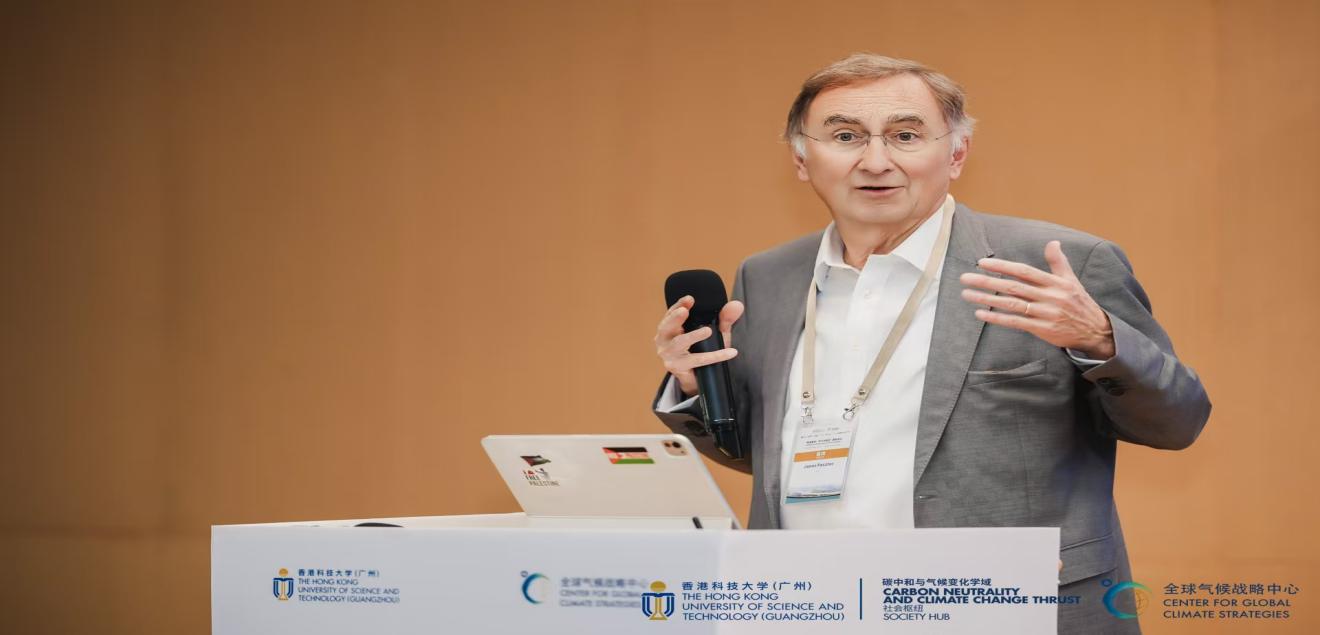
On the morning of 28 October, the conference held its closing plenary on ‘Zero Carbon Prosperity and COP31’. The session was chaired by Zhaoli Jiang, former First-Class Inspector of the Department of Climate Change at the Ministry of Ecology and Environment. Janos Pasztor, former UN Assistant Secretary-General for Climate Change, delivered a keynote address. Participants explored how to integrate Zero Carbon Prosperity into international climate governance and the sustainable development agenda.
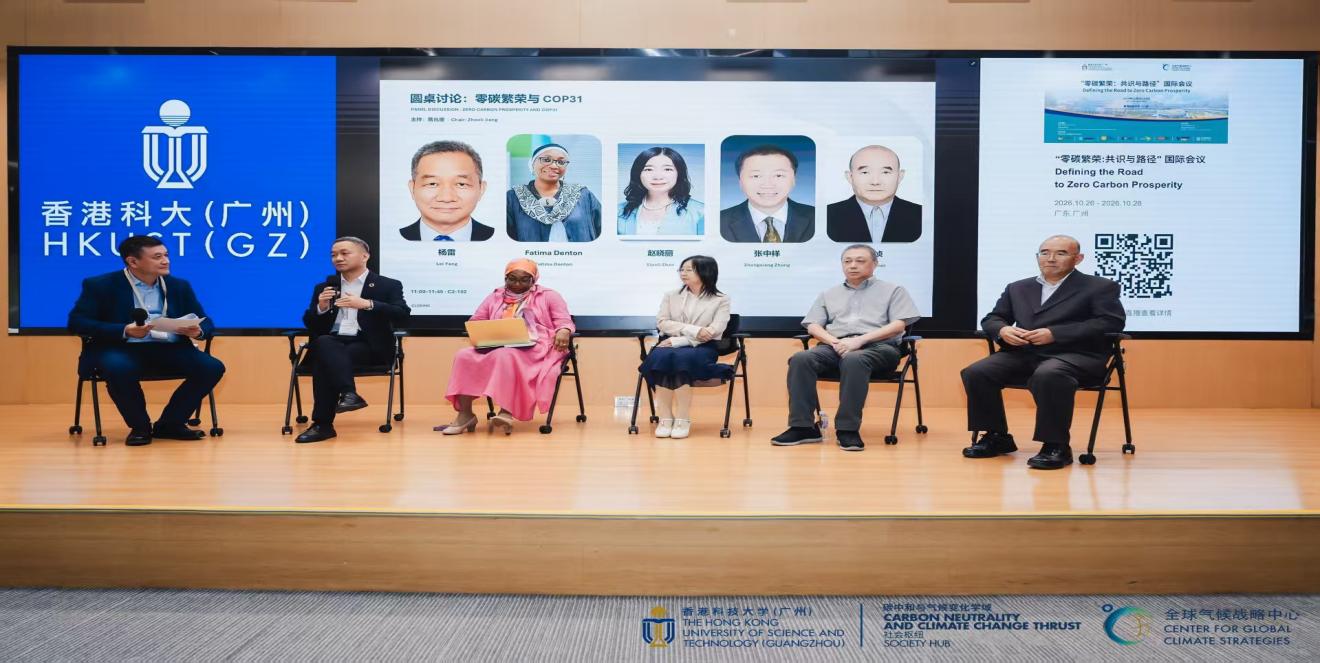
Lei Yang, Deputy Dean of the Institute of Energy at Peking University; Fatima Denton, Founder of Resource Analytics for Future Africa; Xiaoli Zhao, Vice Dean of the School of Economics and Management at China University of Petroleum-Beijing; Zhongxiang Zhang, Visiting Professor in the Carbon Neutrality and Climate Change Thrust at HKUST(GZ); and Zhen Sun, Lead Fellow of the Agricultural Brand Development Group at the China Territory Economy Association, took part in a roundtable discussion on ‘Zero Carbon Prosperity and COP31’.
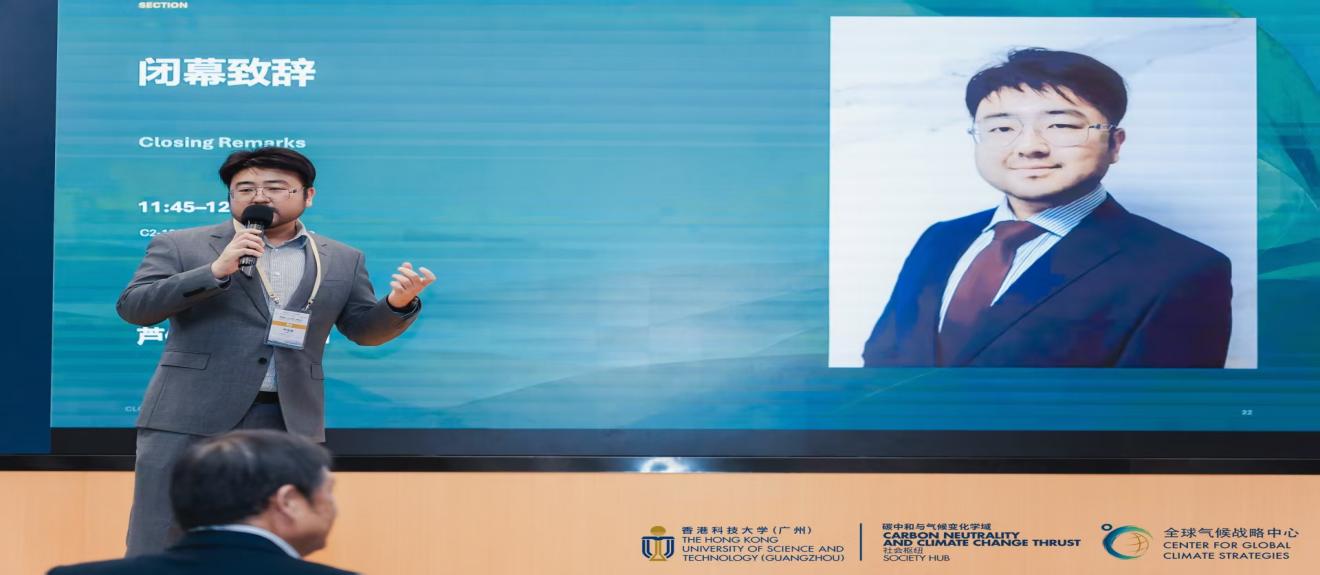
The closing remarks session was chaired by Jiaqi Lu, Associate Director of CGCS Assistant Professor in the Carbon Neutrality and Climate Change Thrust at HKUST(GZ).
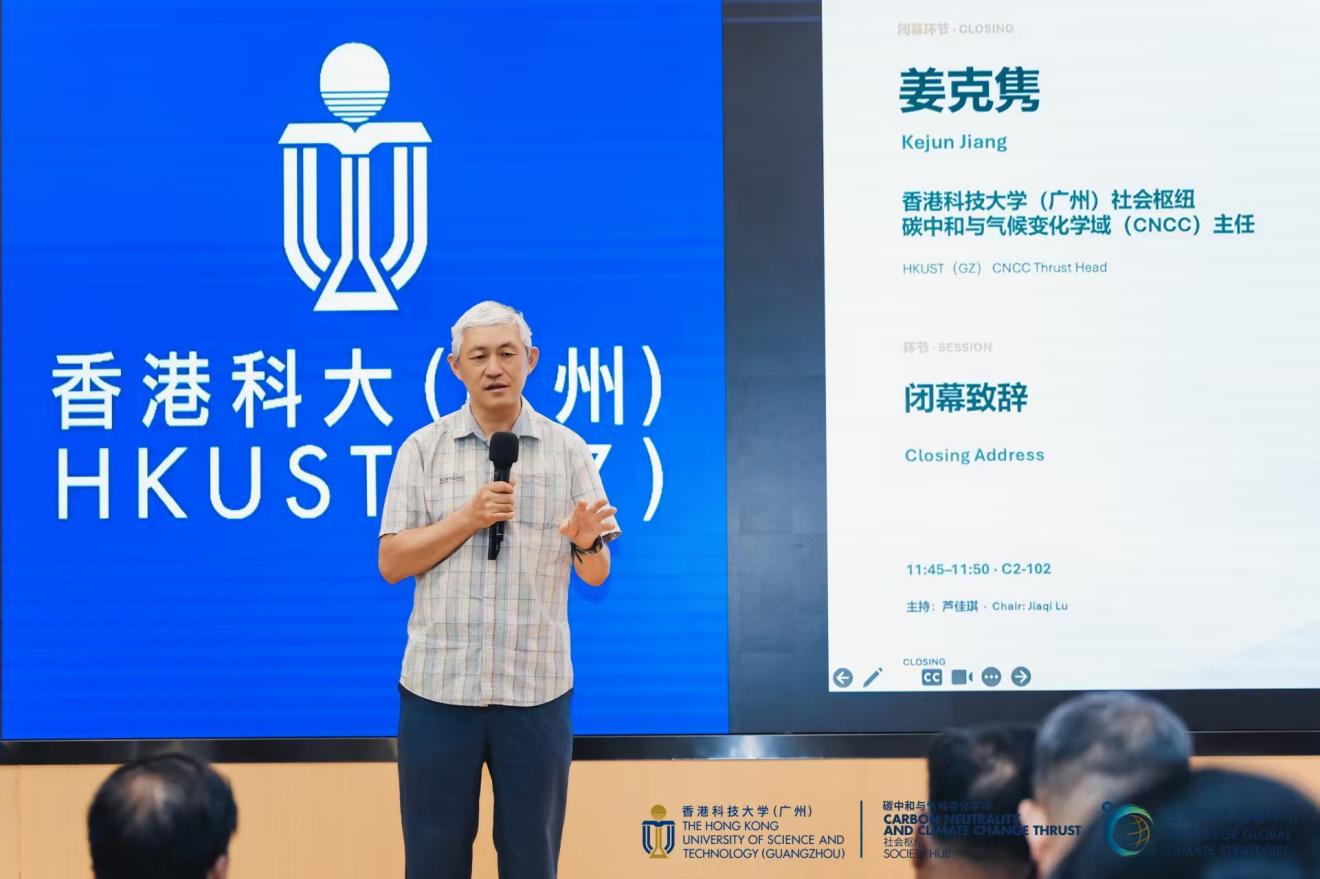
Kejun Jiang, Head of the Carbon Neutrality and Climate Change Thrust at HKUST(GZ), delivered closing remarks.
Zack King, Co-Founder and Programme Director of the Climate Crisis Advisory Group, read out the Guangzhou Declaration on Zero Carbon Prosperity on behalf of the conference. The declaration sets out the core meaning, development principles, assessment criteria and policy pathways of Zero Carbon Prosperity, providing a reference for the 31st United Nations Climate Change Conference (COP31) and subsequent international cooperation.
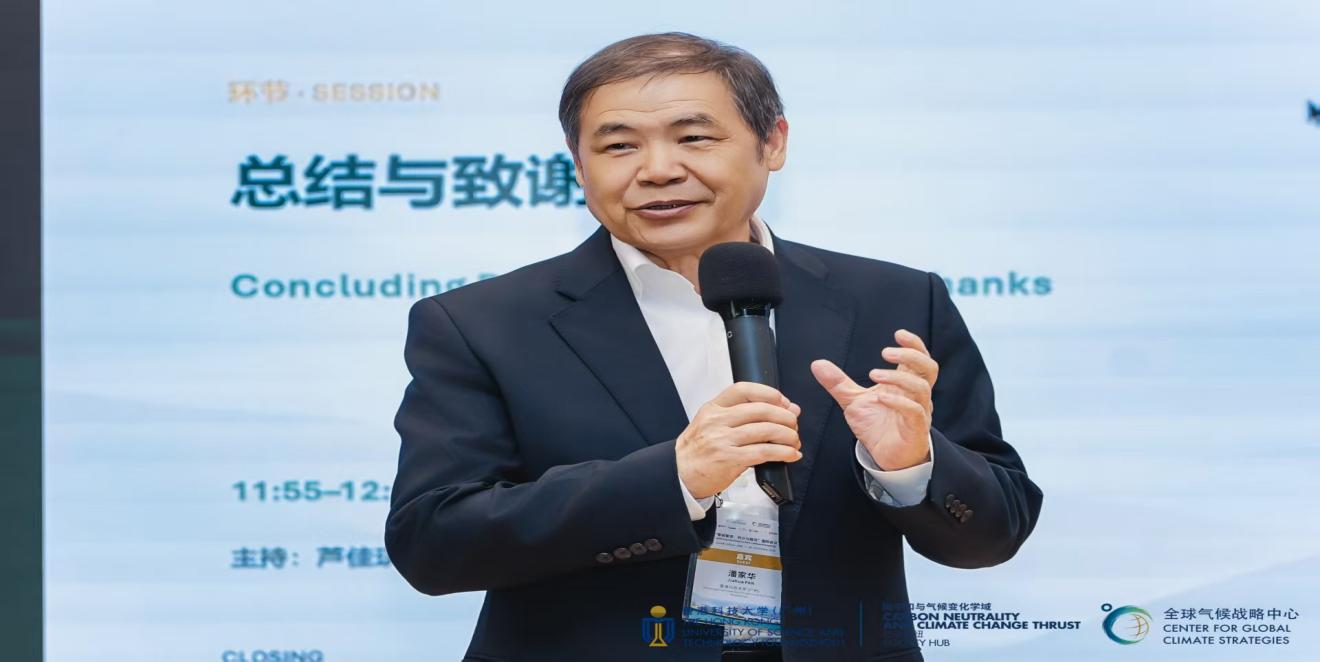
At the conclusion of the conference, Jiahua Pan, Acting Director of CGCS at HKUST(GZ), summarised its outcomes.
Site Visits: Exploring the Green Transition in Ports and Transport
During the conference, participants also visited the Phase IV fully automated terminal at Guangzhou Port’s Nansha Port Area and the integrated supercharging station on Huanshi West Road in Nansha. The visits provided an opportunity to learn about smart port development, charging infrastructure and the application of related green technologies. Focusing on specific applications in ports and transport, the visits offered practical reference points for the conference discussions on energy transition and industrial development.
“零碳繁荣:共识与路径”国际会议于10月26日至28日在香港科技大学(广州)举行
2026年10月26日下午,“零碳繁荣:共识与路径”国际会议在香港科技大学(广州)开幕。会议汇聚来自世界各地的220多位专家学者、政策制定者、国际组织及产业界代表,围绕零碳能源驱动经济增长、产业创新、社会福祉与国际合作等议题展开交流,共同探索新能源推动全球经济繁荣与可持续发展的新路径。本次会议由香港科技大学(广州)主办,全球气候战略中心担任会议秘书处及学术协调机构,会期为10月26日至28日。
2026年4月,在哥伦比亚圣玛尔塔举行的首届“转轨脱离化石燃料国际会议”上,香港科技大学(广州)团队提出“零碳繁荣”理念,获得国际社会积极响应,并被纳入多份会议成果文件。本次广州会议进一步深化这一理念的理论框架、发展路径和政策实践,推动其从学术讨论走向国际合作与实际应用。
10月26日下午,香港科技大学(广州)校长倪明选、中国科学院院士秦大河出席开幕式并致辞。开幕致辞环节由齐晔主持。
倪明选表示,作为一所立足粤港澳大湾区、面向世界的创新型研究型大学,香港科技大学(广州)发挥跨学科研究、科技创新与国际合作优势,积极推动零碳能源技术与经济社会发展深度融合。本次会议既是全球“零碳繁荣”理念的重要交流平台,也是港科大(广州)以科技创新回应全球重大挑战、积极参与国际气候治理的重要实践。香港科技大学(广州)将校园视为“零碳繁荣”实践先驱,学校积极投入零碳校园建设,为零碳能源建设运营及技术验证提供真实场景。
秦大河在致辞中指出,冰川退缩、冻土融化、海平面上升及极端天气气候事件正在影响水资源、粮食安全和人类健康。各国同时面临能源安全、就业、减贫等发展任务,如何把气候行动与促进发展统一起来,是国际社会必须回答的问题。秦大河期待会议形成清晰、开放且具有广泛适用性的概念,完善连接能源、经济、社会与生态目标的可检验、可衡量框架,并提出可操作的技术路径、制度安排与合作项目,为后续国际气候合作提供支持。
是分蛋糕,还是做大蛋糕?从碳约束到零碳繁荣的发展新范式
香港科技大学(广州)全球气候战略中心署理主任潘家华在主旨报告中提出,由于实现全球温升1.5°C管控目标的碳预算十分有限,各国都力争维护其排放权益,是典型的“分蛋糕”式的零和博弈。因而,联合国的气候谈判陷入僵局,举步维艰。破解这一僵局,需要超越零和的分蛋糕思维。香港科技大学(广州)全球气候战略中心的分析表明,经济发展和福祉保障需要的是能源服务,而不是碳。中国的光伏组件生产零碳电力、动力电池储能和终端消费例如电动汽车,正在形成一条对石油消费具有替代效应的产业链条,为以零碳电力—储能—电动终端部分替代燃油车运行的化石燃料链条提供了产业基础。随着太阳能、风能、储能和电气化技术快速发展,全球能源体系正经历深刻变革。零碳发展不仅是应对气候变化的重要手段,更是保障能源安全、推动经济增长、产业升级和改善民生的新动力。
潘家华指出,“零碳繁荣”(Zero Carbon Prosperity)这一种发展新范式,正在勃然兴盛。中国以“新三样”(电动汽车、锂电池、光伏产品)为代表的零碳产业和消费体系,可以做到与化石燃料燃烧排放的二氧化碳完全无关,这为国际社会摒弃碳约束的零和博弈的气候治理模式,提供了合作共赢的解决方案。可再生能源配合储能技术不仅带来稳定灵活的零碳电力,更创造经济增长、就业机会和美好生活。“零碳繁荣”关注能源转型带来的机遇,强调通过发展零碳能源,降低能源成本、增强能源安全、培育新兴产业,让更多国家、企业和普通家庭分享新能源发展的成果。太阳能、风能等可再生能源具有资源分布广泛、发电过程无需持续购买燃料等特点,结合储能、智能电网和电气化技术,有望为制造业、交通运输、农业生产和数字经济注入新动力,推动经济发展模式深刻变革。
英国萨塞克斯大学教授、联合国环境规划署前首席环境经济学家Pushpam Kumar指出,零碳转型不仅具有环境价值,更能够创造长期经济和社会收益。将气候灾害损失、公共健康、自然资本和产业创新等因素纳入考量,气候行动的综合收益有望超过转型成本。然而,这些收益并不会自动实现,全球南方国家仍面临融资成本高、基础设施薄弱和转型收益分配不均等挑战。Kumar强调,全球南方国家应超越单纯以GDP衡量发展的传统方式,将自然资本、社会福祉和经济韧性纳入评价体系,并通过气候风险定价、创新融资机制和差异化政策支持,引导资本流向可持续发展领域,使零碳转型真正成为全球南方实现长期繁荣的经济机遇。
中山大学讲席教授、中国国际发展知识中心原主任赵昌文在报告中强调,全球南方国家不必在工业化与零碳转型之间作出选择,两者可以相互促进、协同发展。他提出“工业化与零碳繁荣双轨转型”的发展思路:一方面,通过基础设施建设、产业园区发展、技术转移和本地能力建设,降低工业化的系统性成本;另一方面,以新能源技术、绿色电力和零碳产业发展培育新的产业竞争力,将碳约束转化为经济增长机遇。他强调,中国经验的价值不仅在于基础设施和技术输出,更在于通过零碳园区、绿电直供、分布式能源等实践,帮助发展中国家建立自主发展的产业体系,实现工业化、经济增长与零碳繁荣的协同推进。
共享零碳发展机遇,推动全球南方共同繁荣
当天下午举行的“南—北—南”圆桌会谈,邀请来自中国、非洲、亚洲及国际研究机构的政策制定者和专家学者,围绕“零碳繁荣”的发展路径与公正转型展开深入交流,探索如何将零碳能源的技术优势转化为经济增长动力,让更多国家和人群共享绿色发展机遇。
首场圆桌以“零碳繁荣:路径与前景”为主题,由北京航空航天大学低碳治理与智能教育部重点实验室主任范英主持,中国地质大学(北京)校务委员会主席雷涯邻、气候危机咨询组联合创始人兼项目主任Zack King及Comlan Nomadoli Yakpey参与讨论。嘉宾围绕零碳能源如何从传统的减排成本转变为推动经济增长、创造就业和增进社会福祉的新动力展开交流,重点探讨新能源产业链的成本下降与市场竞争力。同时,讨论聚焦关键矿产供应链安全与公平、技术转让和产业利益共享,以及储能、智能电网、电气化等技术如何支撑以风光能源为主体的新型电力系统。通过交流不同国家的发展经验,探索兼顾市场效率、能源安全与公平普惠的零碳繁荣实现路径,推动新能源产业从政策支持走向市场驱动,成为经济增长与社会发展的持续动力。
第二场圆桌聚焦“公正转型”,由能源基金会首席执行官兼中国区总裁邹骥主持,中国南方电网公司政策研究部副总经理吴畏、气候战略组织(Climate Strategies)的Hina West、RAFA创始人及伦敦政治经济学院访问实践教授Fatima Denton、Boonjira Khoprasert参与讨论。嘉宾围绕能源转型中的发展公平、社会包容与利益共享展开交流,重点探讨如何兼顾不同国家和群体的发展需求,如何通过绿色融资、就业转型、能力建设和国际合作,帮助非洲、东南亚以及广大发展中国家克服资金、技术与制度障碍,避免能源转型加剧既有的发展不平等,让清洁能源带来的经济与社会收益惠及更广泛的人群。
两场对话分别回应“零碳繁荣”的两个核心问题:如何通过零碳能源创造新的发展机遇,以及如何让这些机遇转化为更加公平、包容的共同繁荣。 通过连接不同地区的发展经验与政策实践,会议旨在推动形成兼顾经济增长、气候行动与社会公平的国际合作新思路。
“零碳繁荣”不仅是能源技术的变革,更关乎全球发展的公平性与包容性。对于仍面临能源供应不足、基础设施薄弱和发展资金短缺等挑战的发展中国家,新能源技术为改善能源可及性、培育本地产业和创造就业提供了新的机遇。
例如,分布式光伏与储能系统能够为偏远地区提供电力,支持农业灌溉、食品冷藏和小型加工;清洁电力与电气化技术相结合,也有望促进产业发展、改善公共服务,增强经济韧性。
本次会议通过“南—北—南”对话,推动各国分享新能源发展经验,加强技术合作、绿色融资与产业协作,让零碳能源带来的发展红利惠及更多国家和人群。
十个工作组深化讨论 推动形成可操作的政策建议
会议通过平行工作组会议和交叉议题交流形式,围绕公共卫生、甲烷减排、中央银行、海运与航空脱碳、零碳繁荣的理论与实践、实现零碳繁荣、粮食安全与农村发展、公正转型与经济多元化、地球韧性、关键矿产价值链合作等十大议题展开专题讨论,通过跨学科对话,推动形成“零碳繁荣”的理论框架、评价标准与政策建议,为国际合作提供新的研究方向。
10月28日上午,会议举行以“零碳繁荣与COP31”为主题的闭幕全体会议。由生态环境部应对气候变化司原一级巡视员蒋兆理主持,联合国前助理秘书长(气候变化)Janos Pasztor发表主旨演讲,与会专家共同探讨如何将零碳繁荣理念融入国际气候治理与可持续发展议程。北大能源研究院副院长杨雷、Resource Analytics for Future Africa创始人Fatima Denton、中国石油大学(北京)经济管理学院副院长赵晓丽、香港科技大学(广州)碳中和与气候变化学域特聘教授张中祥、中国国土经济学会精品农业建设专委会主任委员孙桢就“零碳繁荣与COP31”话题展开圆桌讨论。
会议闭幕环节由全球气候战略中心副主任芦佳琪主持,社会枢纽碳中和与气候变化学域主任、教授姜克隽致辞,气候危机咨询组联合创始人兼项目主任Zack King代表大会宣读《“零碳繁荣”广州宣言》,该宣言明确零碳繁荣的核心内涵、发展原则、评价标准与政策路径,为第31届联合国气候变化大会(COP31)及后续国际合作提供参考。会议最后,全球气候战略中心署理主任潘家华对大会的成果进行了总结。